
Discover what embedded systems are through everyday products, clear visuals and a toothbrush example, then follow a practical beginner path to start learning.
You press the button on an electric toothbrush. A washing machine moves through a cycle. Your earbuds turn a stream of digital audio into sound. Familiar actions can depend on computing hidden inside the product.
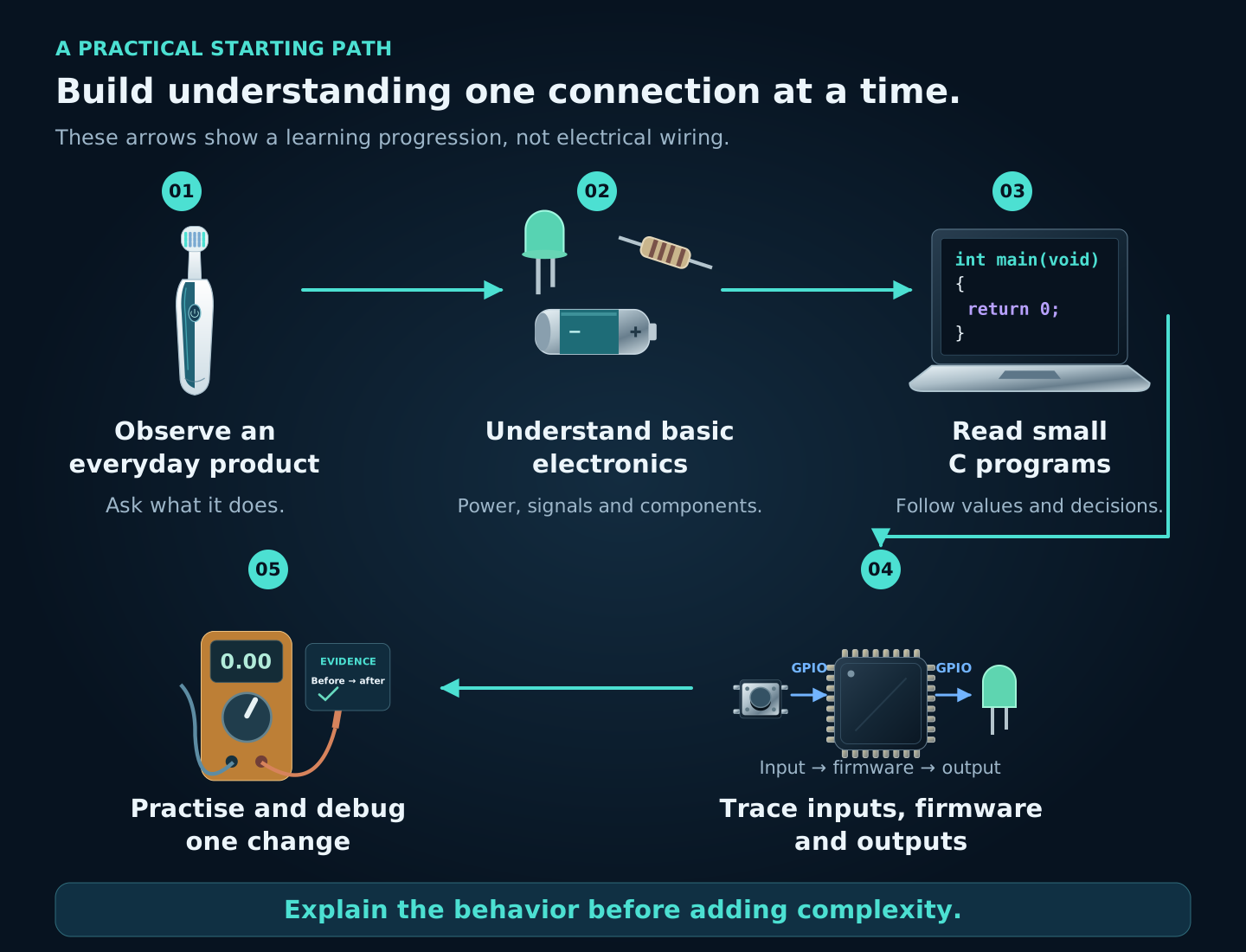
Learning embedded systems begins with noticing that hidden work. What information enters? What makes the decision? What changes in the real world? Follow those questions through one everyday example, then use a clear path to begin learning.
What is an embedded system?
An embedded system is a computing system designed around a defined job within a device or larger system. Hardware and software work together to deliver that product's behaviour. A washing-machine controller, for example, coordinates part of the appliance's operation.
A general-purpose computer is designed to run many kinds of user-selected applications. Embedded computing is usually organized around the product's requirements. The boundary can blur in complex devices; the useful question is what responsibility does this computing system serve?
Its size, a visible screen, or the presence of wireless connectivity does not tell the whole story. Identify the job and the connections before naming the technology.
Find embedded computing in your day
Look for a product that receives information, processes it and produces an effect. These are representative functions; the exact implementation depends on the model.
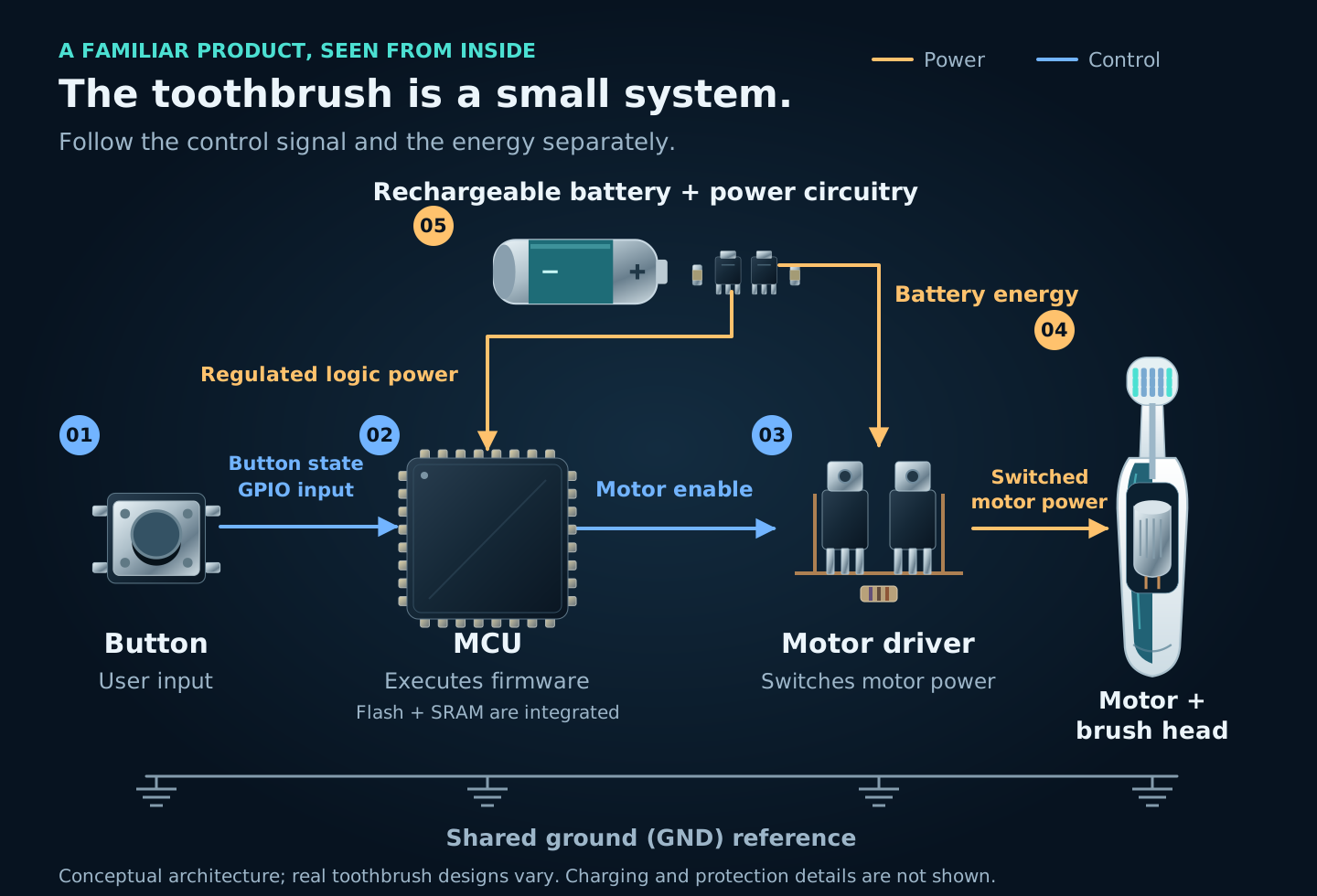
- Electric toothbrush — receives button presses and operating settings; controls the motor that moves the brush head.
- Washing machine — receives the selected programme and sensor information; coordinates washing actions and motor operation.
- Keypad door lock — receives entered digits and door state; checks an access request and controls the lock mechanism.
- Wireless earbuds — receive audio data and user commands; process audio and control playback.
- Smartwatch — receives motion information and user input; updates activity information and the display.
- Wi-Fi router — receives incoming network packets; processes and forwards network traffic.
Some inputs are physical measurements; others are button states, commands or network data. A separate environmental sensor is therefore not a requirement for every embedded system.
Follow one button press inside a toothbrush
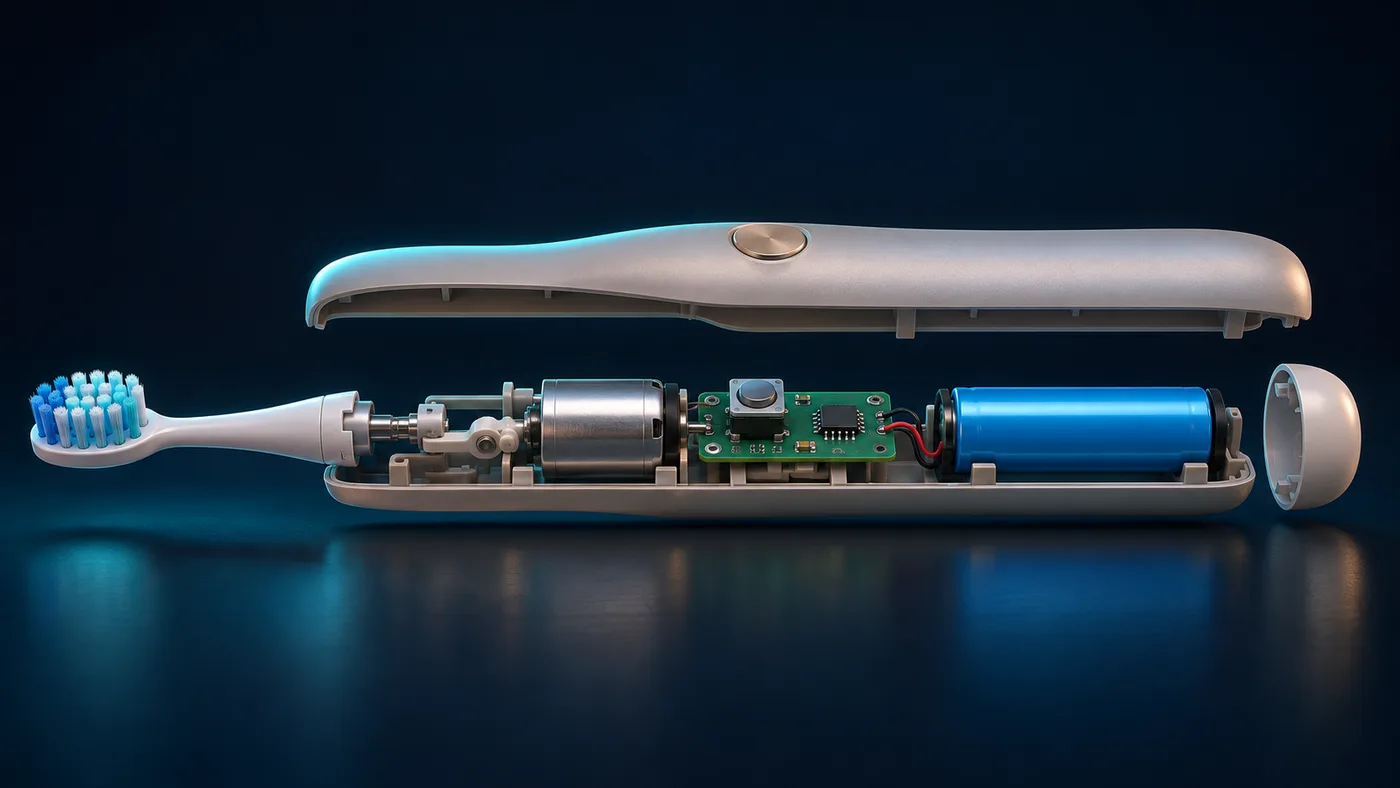
Consider the conceptual electric toothbrush illustrated here. Texas Instruments publishes a real reference design combining a battery, microcontroller and motor driver, demonstrating how everyday products use embedded control. Our illustration explains those broad roles; it is not a reproduction of that circuit.
Want to understand how this works internally? Explore real execution flows, practical scenarios, debugging and assessments through DIVE2CORE.